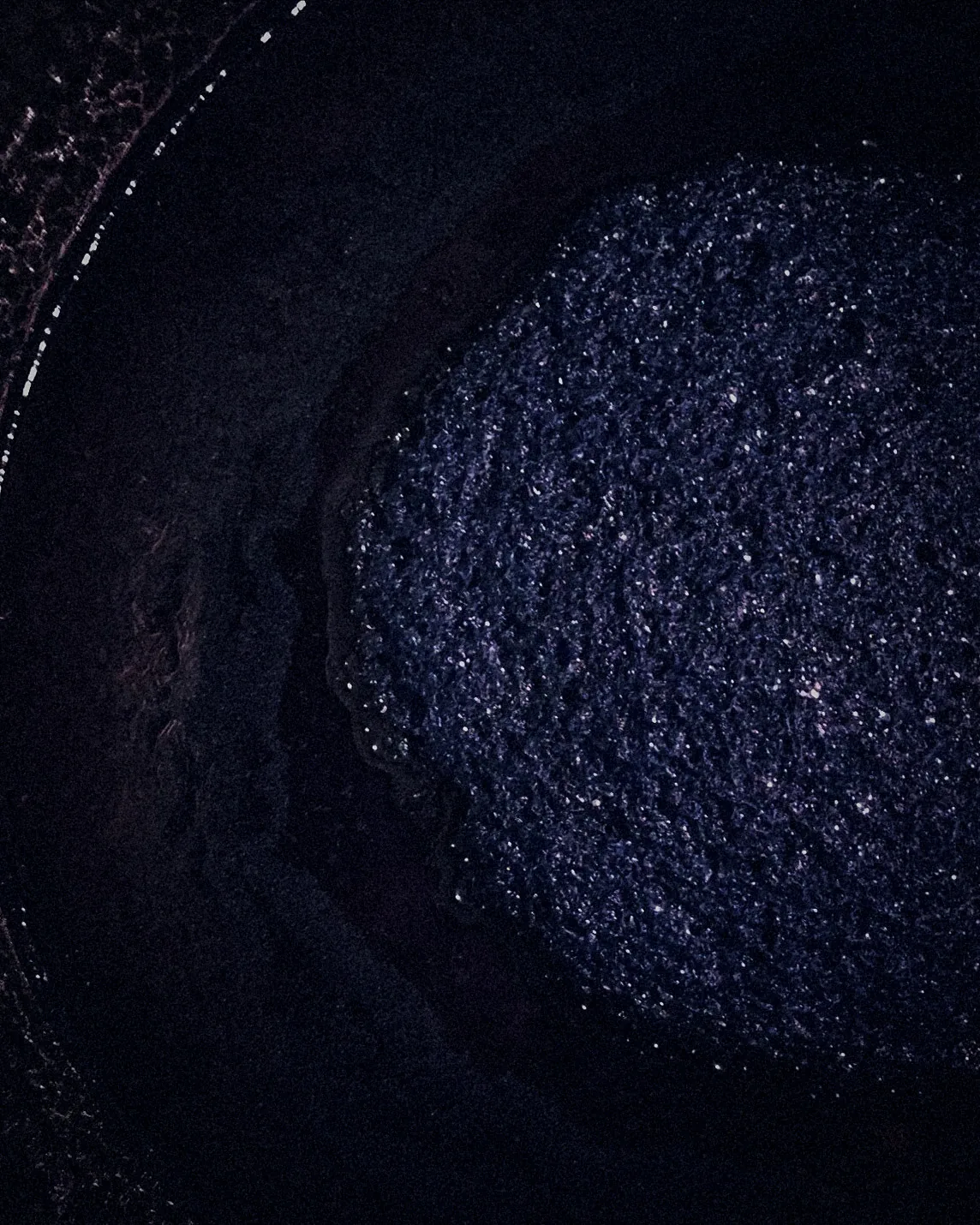
Japanese Indigo
A color shaped by plants, fermentation, hands and time.
A blue rooted in Japan.
Indigo dyeing — aizome — has been practiced in regions across Japan for generations. Farmers cultivate the indigo plant and ferment its leaves into sukumo, a traditional dyestuff, while dyers tend living vats that turn cloth a deep, layered blue.
The deep tones produced this way came to be admired internationally, and Japanese indigo is often referred to abroad as “Japan Blue.” Today, farmers and dyers across Japan continue this work — and it is with their indigo that our first collection begins.
We describe this heritage carefully: exact dates and claims vary between sources and workshops, and we state only what can be reasonably said.
From leaf to deep blue.
A typical journey of naturally dyed indigo. Details differ from workshop to workshop — this is part of what makes each maker’s blue their own.
Indigo plant
Indigo begins as a plant. In Japan, leaves are cultivated and harvested as the raw source of the dye.
Preparation
Harvested leaves are dried and, in the traditional Japanese method, fermented over months into a dyestuff called sukumo.
Fermentation
The dye bath itself is a living thing. Dyers nurture and balance the vat, reading its condition day by day.
Dyeing
Cloth is dipped into the vat by hand. When it emerges, it is not yet blue — often a green that has to meet the air.
Oxidation
Exposed to oxygen, the color transforms toward blue. This moment of change is at the heart of indigo dyeing.
Repetition
Depth is not achieved in one pass. Dyeing and oxidation are repeated — sometimes many times — each layer building the tone.
Washing & finishing
The cloth is washed, dried and finished, fixing the color the maker set out to reach.

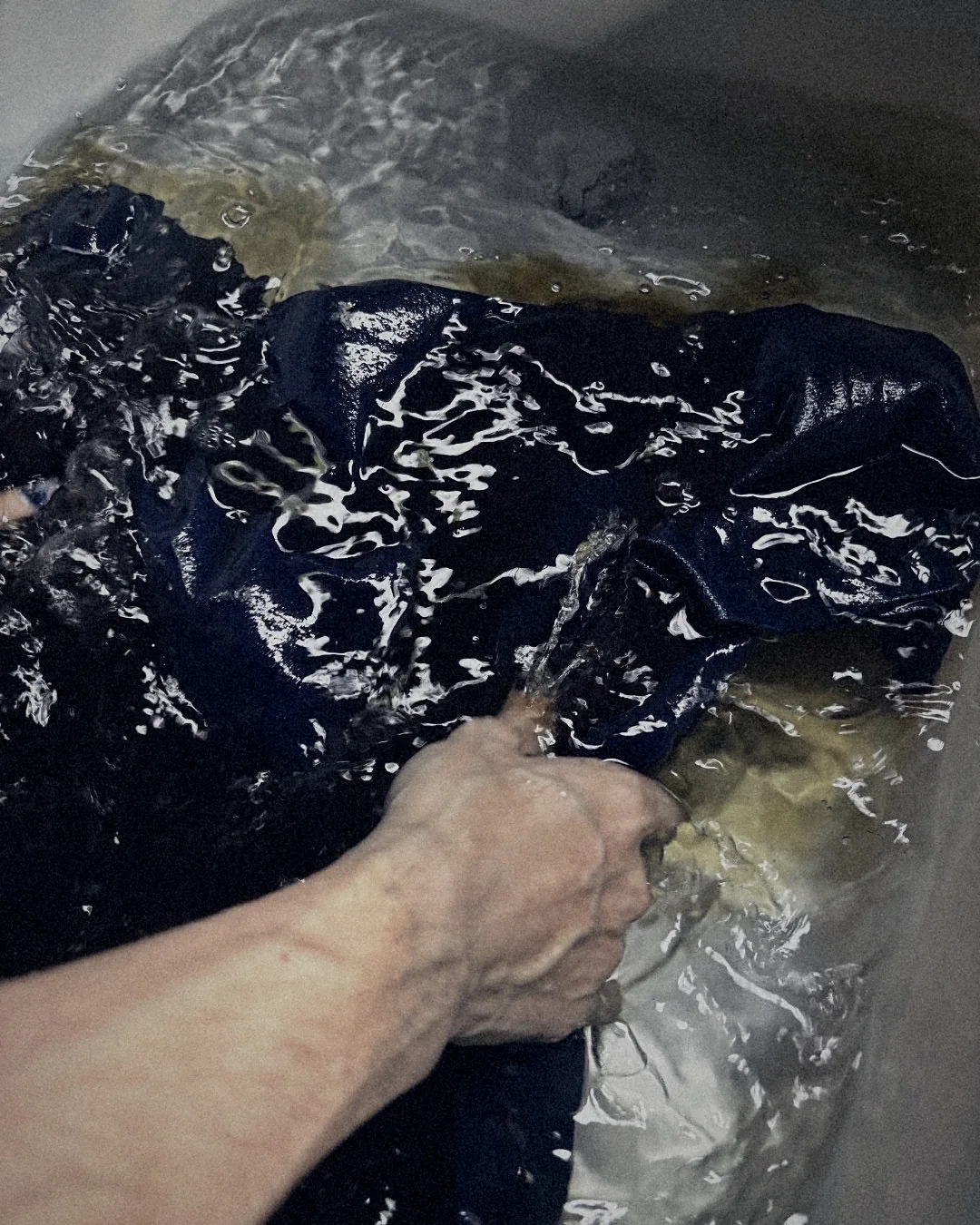

Green when it leaves the vat.
Oxidation · The moment of change
Blue when it meets the air.
The blue is built, layer by layer.
A pale sky blue after one dip. A deep, near-black indigo after many. The depth of the color records the time spent making it.
Illustrative — the number of dips needed for a given depth varies by vat, fiber and workshop.

No two pieces are the same.
Because the dye is natural, the vat is alive and the work is done by hand, each piece varies subtly — in tone, in shading, in pattern, and occasionally in dimension.
We ask buyers to see this not as inconsistency, but as the honest signature of handwork. It is precisely what distinguishes these pieces from industrially dyed goods, and it is stated clearly in our product information so that your customers can value it too.
A color that keeps living
Indigo continues to change gently through use and washing, softening in tone and developing character over years. Many collectors consider this aging one of indigo’s greatest qualities.
At home far beyond the tatami room.
Deep indigo sits naturally against concrete, plaster, pale wood and stone. A single noren can define a doorway in a modern apartment; a dyed panel can anchor a hotel lobby or gallery wall.
We work with retailers, architects and interior designers to place indigo in contemporary contexts — residential, hospitality and retail — where its depth and quietness do their best work.